
Enterprise Cloud Security: Close the Gaps Beyond Cloud

A cloud dashboard can show no urgent findings while an employee’s stolen session still opens a sensitive application. Enterprise cloud security has to follow the whole working path: the person, their device, the identity provider, the application and the data it exposes.
Cloud security already includes controls for identities, insider misuse, applications and data. The gap appears when an organization treats one provider’s settings or one monitoring product as its entire security program. This guide explains how to check that coverage without simply buying more tools.
Enterprise cloud security: Understand the shared responsibility model
Providers protect the infrastructure and service components they operate. Customers remain responsible for the parts assigned to them under the selected service model. Those boundaries vary: a virtual machine generally leaves more operating-system work with the customer than a highly managed service.
AWS, for example, distinguishes customer-managed guest operating systems on EC2 from more abstracted services where AWS operates the underlying platform. Across those choices, customer responsibilities still include appropriate data handling and access configuration. Read the documentation for each service you actually use.
Turn that model into named operational ownership. “The provider handles security” is not an acceptable answer to who reviews permissions, rotates an exposed credential or tests a recovery procedure.
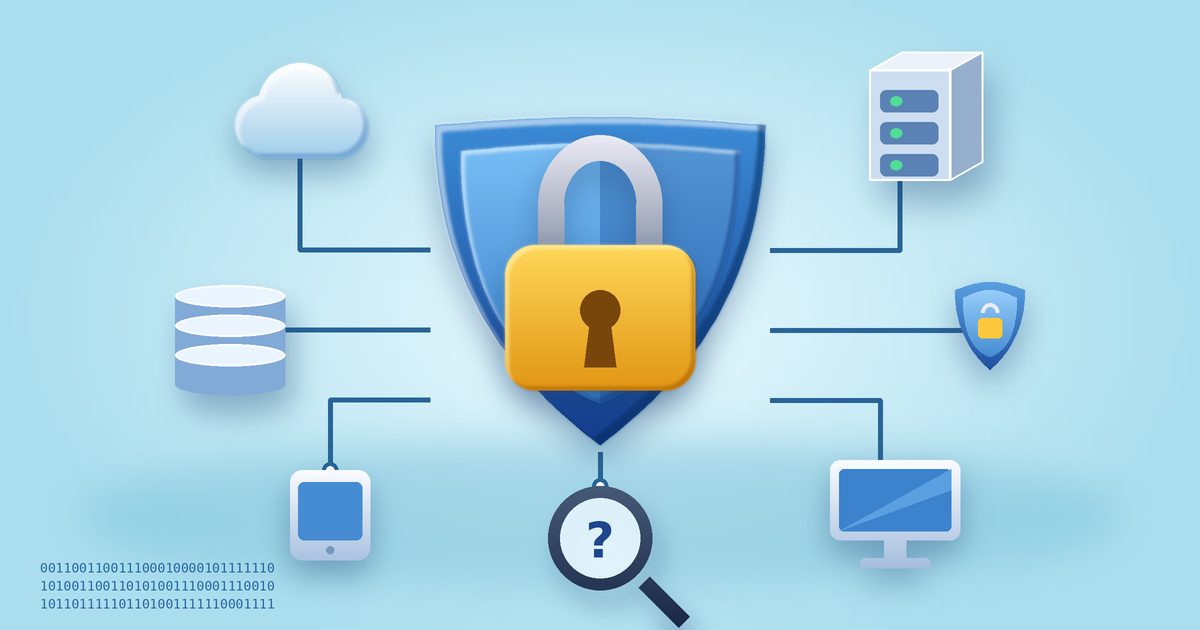
An enterprise cloud security review should follow an access path across the identity provider, endpoint and application.
Map a real access path before reviewing controls
Choose an important workflow, such as a support agent accessing customer records. Trace the device, sign-in process, application permissions, APIs, data stores and exports. Include SaaS integrations and service accounts, not only infrastructure inside the primary cloud account.
| Area | A question to answer | Evidence to inspect | |
|---|---|---|---|
| 1 | Identity | Can a stolen or excessive privilege expose the service? | Authentication policy, access reviews and privileged-role records. |
| 2 | Endpoints | What happens if the user’s device is compromised? | Device posture, patching and endpoint response coverage. |
| 3 | Applications and APIs | Is each sensitive action authorized? | Access-control tests, dependency review and protected secrets. |
| 4 | Cloud configuration | Are public exposure and service permissions intentional? | Inventory, configuration review and change history. |
| 5 | Data | Where can sensitive records be copied or retained? | Classification, export permissions and retention controls. |
| 6 | Detection and recovery | Can the team investigate and restore service? | Relevant logs, response exercises and restore results. |
The table is a review aid, not proof of compliance. Each control needs to apply to the actual environment and have an owner who can demonstrate that it works.
Identity and endpoints need coordinated protection
Strong authentication is valuable, but it does not make every authenticated request safe. Limit privileges, review session behavior and use device-aware controls where appropriate. Remove access when roles change, and check machine identities as carefully as employee accounts.
Consider a compromised developer laptop with access to deployment credentials. A secure storage bucket will not prevent misuse if those credentials legitimately permit changing the application that reads it. Reduce standing access, protect the deployment path and retain enough evidence to investigate changes.
Assign an owner to each enterprise cloud security boundary so a finding does not remain between teams.
Applications, dependencies and integrations matter
A firewall cannot correct every application authorization bug. Test whether one user can access another user’s records, protect administrative operations and keep secrets outside repositories and client-side code. Review third-party dependencies and supported update paths.
Integrations deserve particular attention because a small plugin or automation can have substantial permissions. Record what data it receives, which actions it can perform and how access will be revoked. Remove unused connections through a controlled process after checking their dependencies.
Protect data throughout its lifecycle
Encryption helps protect data, but access to decryption keys and authorized applications still matters. Classify important information and restrict who can read, export, share or delete it. Review copies in downloads, analytics systems, backups and collaboration tools.
Apply retention deliberately and make deletion responsibilities clear. Regulatory obligations depend on the organization, data, jurisdiction and service configuration; using a provider with compliance certifications does not automatically make a customer’s workload compliant.
Connect detection to a response people can perform
Collect the events needed to understand identity changes, privileged actions, application access and important infrastructure changes. Correlate them around meaningful scenarios rather than assuming that every alert deserves the same urgency.
Test enterprise cloud security assumptions using effective permissions and observable application behavior.
Practice a realistic incident: a privileged account is compromised and an attacker changes a service. Who can revoke the session, preserve evidence, restrict access and restore a trusted version? The exercise may reveal a missing permission, an unreachable contact or a backup that nobody has restored.
A practical plan for the next 30 days
- Week 1: inventory one important service, its access paths and its owners.
- Week 2: resolve the most consequential identity and exposure gaps.
- Week 3: verify useful logging and rehearse a focused incident scenario.
- Week 4: test restoration and document unresolved risks with accountable owners.
Prioritize changes by plausible impact and exposure rather than the number of dashboard findings alone. Keep availability requirements in view when restricting access or modifying network paths, and verify the affected user workflow after each change.
Do enterprises need every security product?
No. Start with required outcomes and existing coverage. A product is useful when it closes a meaningful gap and the team can operate it. Several tools collecting the same events can still leave a critical service without a clear response owner.
Good security makes the next decision easier: who owns this access, what evidence would reveal misuse, and how would we recover? Which of those answers is least clear for your most important application?
Enterprise cloud security: references and related reading
- AWS: shared security responsibilities
- AWS Well-Architected security and reliability guidance
- Security and cloud cost decisions
- Reviewing an exposed Jenkins environment
Leave a Reply