
Managing Anxiety: 7 Gentle Ways to Feel More Grounded
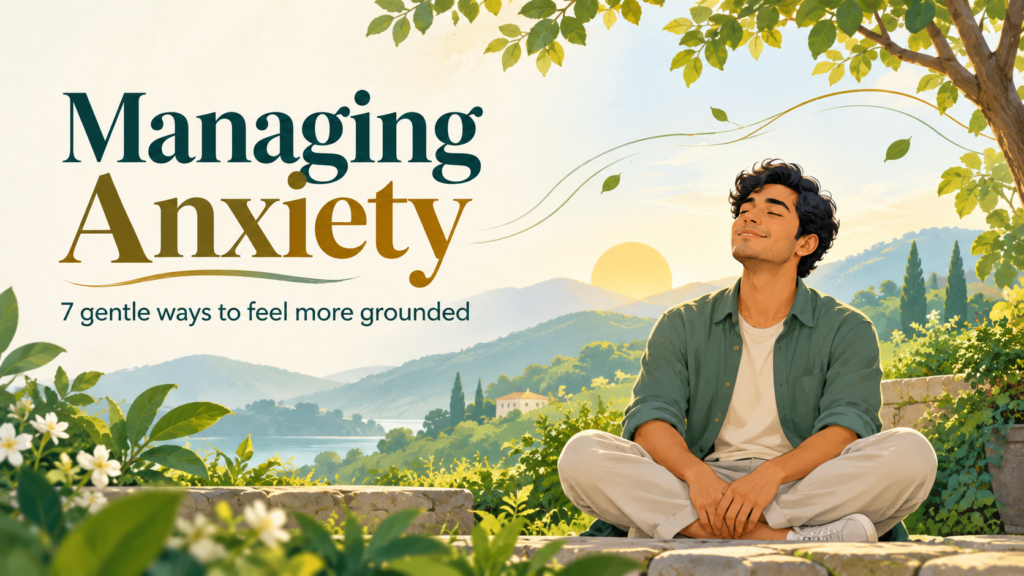
Managing anxiety can start with a very ordinary moment: putting the phone down, noticing your feet on the floor, and deciding what needs your attention next. Perhaps you have reread a work message three times, or you are lying awake rehearsing tomorrow’s conversation. You do not need a perfect morning routine to begin taking care of yourself.
This guide brings together seven gentle approaches to everyday anxiety, along with signs that it is time to ask for professional support. Choose one thing that feels manageable today. Turning self-care into another demanding checklist rarely makes a difficult day feel easier.
General wellbeing information, not a diagnosis or a substitute for individual medical care.
Understanding anxiety symptoms
Anxiety is a feeling of worry, unease or fear. It can be a normal response to uncertainty, such as an exam, a difficult conversation or a new responsibility. Anxiety disorders involve more persistent or excessive fear and worry that can disrupt everyday life. Having a stressful afternoon does not, by itself, mean you have a disorder.
Anxiety symptoms may include restlessness, difficulty concentrating, muscle tension, sleep problems or a racing heart. These experiences can also have other causes. Avoid diagnosing yourself from a symptom checklist; a healthcare professional can help you understand what is happening.
1. Start managing anxiety with comfortable breathing
Sit somewhere comfortable, with your back supported if that helps. Let your shoulders soften. Breathe gently, allowing the breath to move at a comfortable pace without forcing it. If counting helps, count slowly as you breathe in and out; there is no need to reach a particular number.
The NHS breathing exercise emphasises gentle, regular breathing. Avoid straining or holding your breath to meet a target. If you feel dizzy or more uncomfortable, stop the exercise and return to your usual breathing. Breath-focused exercises do not suit everyone.
2. Come back to your surroundings
When thoughts race ahead, a grounding exercise may help you reconnect with the present. The 5-4-3-2-1 method invites you to notice five things you can see, four you can feel, three you can hear, two you can smell and one you can taste.
Take your time. You might notice the edge of a desk, the fabric of a sleeve or the sound of a fan. Adapt the exercise to the senses available to you, and skip anything uncomfortable. It is an attention exercise, not a test you must complete correctly.
3. Choose one small next step
A useful question on an overwhelming day is: “What is the next practical thing I can do?” For example, “sort out my entire workload” is vague. “Write down the deadline and ask which task comes first” gives you somewhere to begin.
Try making two short notes: what needs action today, and what can wait. This is a simple organising suggestion, not treatment. Managing anxiety does not require you to resolve every uncertainty before you carry on with your day.
4. Make room for sleep and rest
Poor sleep and anxiety can travel together. A reasonably consistent sleep schedule and a quieter wind-down period are useful foundations. NIMH notes that adequate sleep can support anxiety care alongside established treatment.
Make the change specific and realistic: leave work messages until morning when possible, or put tomorrow’s essentials in one place before bed. You are creating a little room to rest, not setting yourself another standard to fail. If sleep difficulties persist, discuss them with a clinician.
5. Move in a way that suits you
Regular physical activity can support mental wellbeing. Walking, gentle stretching or another activity you enjoy may fit more comfortably into your day than a demanding exercise plan. Choose movement appropriate to your health and abilities.
Perhaps that means a short walk after lunch or a few comfortable stretches between tasks. Start with what is possible rather than someone else’s routine. Exercise can be part of managing anxiety, but it does not replace professional care when that is needed.
6. Notice food, caffeine and alcohol habits
Regular, balanced meals support general wellbeing; no single food or supplement cures anxiety. Notice whether coffee or energy drinks seem to leave you more jittery or interfere with sleep. Reducing caffeine may help some people, especially alongside appropriate treatment.
Avoid relying on alcohol to cope with anxious feelings. You could keep a brief, non-judgemental note of your sleep, caffeine and mood to discuss with a clinician. The aim is to understand patterns, not to blame yourself for having symptoms.
7. Let someone support you
You do not need a polished explanation before speaking to someone you trust. A simple opening might be: “I’ve been feeling on edge lately. Could we talk for a few minutes?” Be clear about what would help: listening, company on a walk, or support arranging an appointment.
For a related reflection on being more open about how you feel, read Unveiling the Masks: Navigating Life Beyond the Facade. Honest conversation can sit alongside professional support; you do not have to choose between them.

When managing anxiety needs professional support
Seek help when worry feels hard to control, keeps returning, or affects sleep, work, relationships or ordinary activities. You do not have to wait until things become unbearable. A doctor or qualified mental health professional can assess symptoms and discuss options such as psychological therapies, including cognitive behavioural therapy, and medication when appropriate.
Seek urgent medical help for severe chest pain, severe difficulty breathing, fainting or sudden confusion. Do not assume these symptoms are anxiety. If you cannot keep yourself safe, contact local emergency services or go to the nearest emergency department.
A gentle place to begin today
Choose one action from this article and make it small enough to try: a comfortable breathing pause, a short walk or a message to someone you trust. Managing anxiety is not a contest in willpower. Your needs may change, and getting help is a practical part of caring for yourself.
Sources and further reading
- World Health Organization: Anxiety disorders
- NIMH: Generalized anxiety disorder
- NHS: Anxiety, fear and panic
Leave a Reply